



Part of the Greenland Ice Sheet completely melted about 7,000 years ago at temperatures close to those predicted for the end of this century, and it could have big implications for future sea-level rises, according to a new study.
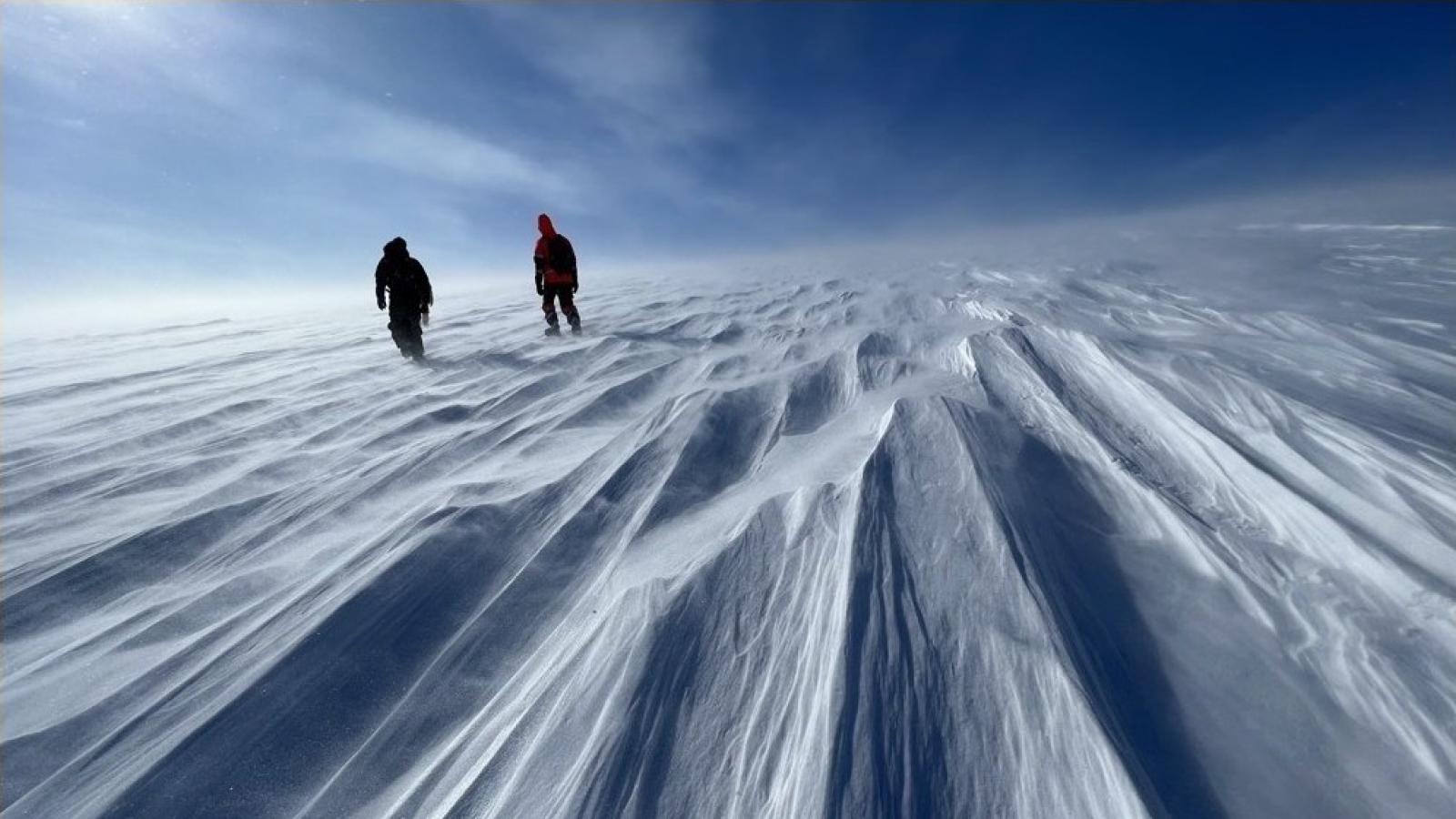
The Prudhoe Dome, now a 1,640-foot (500-meter) thick ice cap covering 965 square miles (2,500 square kilometers) of northwestern Greenland, melted under the warmer temperatures of the early Holocene, exposing the sediment beneath.
“When all you see is ice in all directions, to think of that ice being gone in the recent geological past and again in the future is just really humbling,” lead author Caleb Walcott-George, a geologist at the University of Kentucky, said in a statement.
After the end of the last ice age about 11,700 years ago, temperatures at Greenland climbed to higher than current averages, leading to widespread ice melting. But the effects of the changing climate on the extent of the ice sheet are difficult to determine, since much of the evidence that points to ice coverage — or lack thereof — during the Holocene is buried beneath existing ice today.
In the new study, published Monday (Jan. 5) in the journal Nature, scientists drilled through the Prudhoe Dome to collect sediment from beneath the ice sheet. Then, they used infrared light to measure how long the sediments had been buried under the dome without being exposed to sunlight.
The sediment last saw the sun about 7,100 years ago, the team found. That means that the ice must have fully melted at that point in order to expose the dust and rock underneath. Chemical signatures in the ice column suggest that none of the ice was left over from the last ice age, and that the dome fully melted and reformed in the years since.
Summer temperatures were 5.4 to 10.8 degrees Fahrenheit (3 to 6 degrees Celsius) warmer in the Early and Middle Holocene than they are now. Major climate models such as the CMIP6 predict that by 2100, summer temperatures could rise to about the same values. That warming could have a major impact on the Greenland Ice Sheet, the researchers wrote in the study.
But it’s not yet clear how long temperatures had to remain that high to fully melt the ice of Prudhoe Dome. Limiting the amount of future warming might help curtail melting at the ice sheet, the researchers wrote.

The early Holocene “is a time known for climate stability, when humans first began developing farming practices and taking steps toward civilization. So for natural, mild climate change of that era to have melted Prudhoe Dome and kept it retreated for potentially thousands of years, it may only be a matter of time before it begins peeling back again from today’s human-induced climate change,” study co-author author Jason Briner, a geologist and paleoclimatologist at the University at Buffalo, said in the statement.
Additional ice cores taken from elsewhere in Greenland could help map just how far the ice sheet retreated during the Holocene’s warmer spell, providing a better insight into how it might respond in the future, and how sea levels might rise as a result. “We have very reliable, numerical models that can predict the rate of melting, but we also want real, observational data points that can tell us indisputably that X amount of warming in the past led to X amount of ice being gone,” Briner said.
Study co-author Joerg Schaefer, a research professor at Columbia University’s Lamont-Doherty Earth Observatory, added that the findings will help show which parts of the Greenland Ice Sheet are most vulnerable — which is critical for predicting local sea level rise. “This new science field delivers this information via direct observations and is a game-changer in terms of predicting ice-melt,” he said in the statement.