

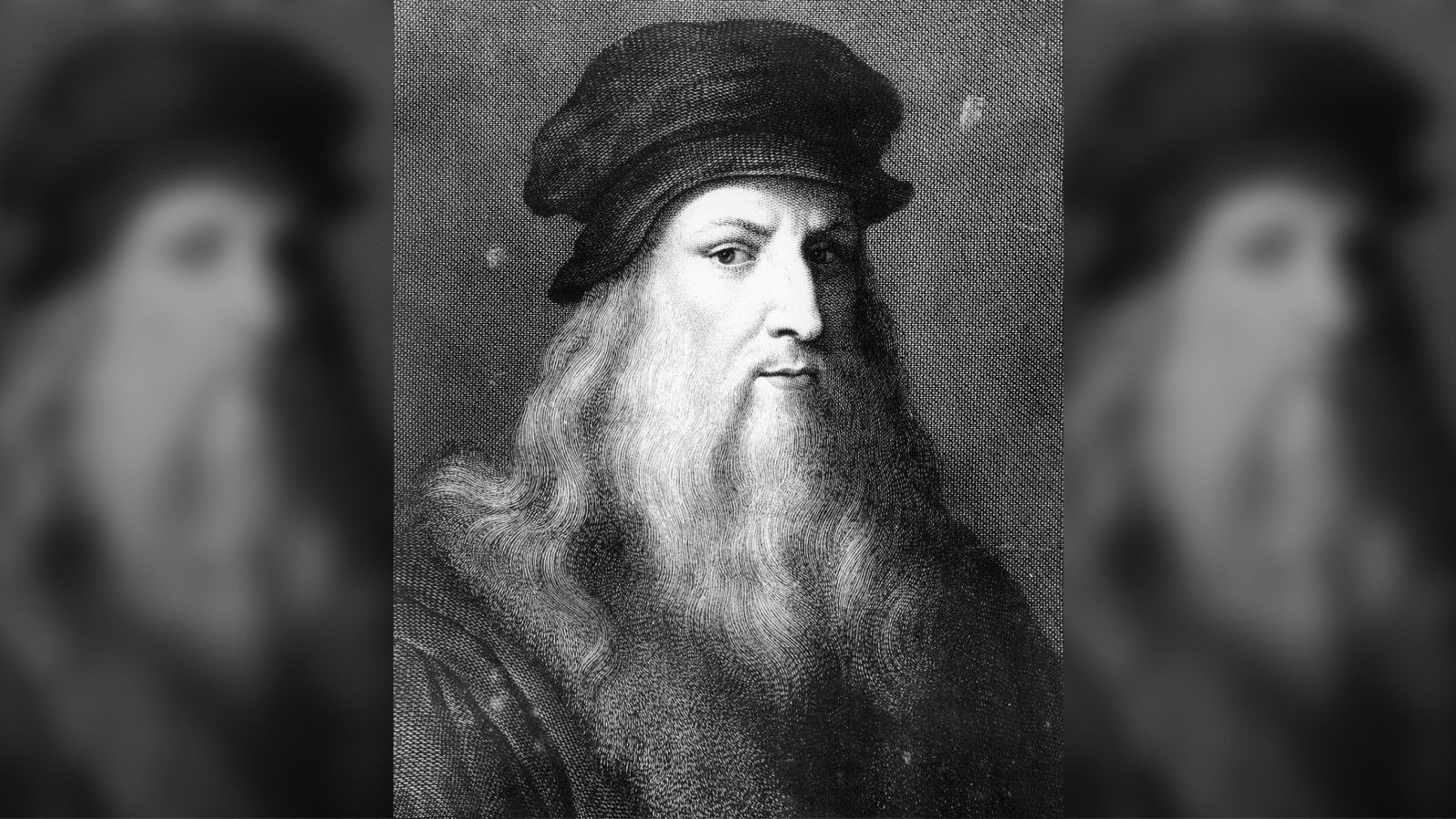
Scientists say they may have extracted Leonardo da Vinci’s DNA from a Renaissance-era drawing for the very first time.
The trace DNA, embedded in a red chalk sketch called the “Holy Child” that some claim was made by da Vinci, shows similarities with genetic material recovered from a letter penned in the 1400s by Frosino di ser Giovanni da Vinci, a cousin of Leonardo da Vinci’s grandfather, Antonio da Vinci.
Because Y chromosome sequences are passed down almost unchanged from father to son, the recovery of these sequences is “a great starting point” for researchers who want to piece together Leonardo da Vinci’s DNA, Charlie Lee, a geneticist who leads the Jackson Laboratory for Genomic Medicine in Connecticut who was not involved in the study, told Science.
However, some experts don’t think Leonardo da Vinci drew “Holy Child” himself, believing instead that one of his students made the sketch.
As a result, “it’s a flip of a coin” whether the DNA from the drawing is da Vinci’s, said Lee. The genetic material could belong to a student or to any number of curators with Tuscan roots who handled the drawing over the years, Science reported.
Researchers want to reconstruct da Vinci’s DNA to help authenticate some of his art. Some experts also suggest the Italian polymath’s genetic material could reveal biological reasons for his exceptional artistic and other abilities, such as better-than-normal vision.
However, there are many hurdles in the way. For one, da Vinci’s tomb in France was partially destroyed during the French Revolution, and his remains lost, or at least mixed with others, during a move to a new supposed burial site at the Chapel of Saint-Hubert in Ambroise.
Yet although this grave may contain bones rich in the Renaissance polymath’s DNA, researchers are not granted access to sequence genetic material from the tomb until a reliable comparison sample is found elsewhere.
This has left scientists with few options but to try to extract DNA from da Vinci’s artworks. This poses challenges as some pieces are off limits and others — such as “Study of the Front Legs of a Horse” — have no traces of human DNA. “Holy Child” is the only drawing attributed to Leonardo da Vinci that has yielded human DNA to date; however, its authorship is debated.
Another problem is that da Vinci’s mother, Caterina di Meo Lippi, is buried in an unknown location. Caterina was a teenage servant when she gave birth to Leonardo. If found, her remains could provide a match with the “Holy Child” drawing for mitochondrial DNA, a type of DNA that is passed on from mother to child and typically found in bigger quantities on objects than DNA from chromosomes is.
Scientists have also been denied access to da Vinci’s father’s tomb in Florence, where they may have been able to find Y chromosome DNA to match with “Holy Child.” And da Vinci himself doesn’t have any known direct descendants, because he never married or had children.
One remaining option is to find other male da Vinci relatives to compare the Y chromosome sequences from “Holy Child” with. Researchers are currently analyzing three bones recovered from a family vault in Italy where Leonardo’s grandfather Antonio da Vinci is buried, and are also sampling DNA from known living descendants. The teams are also sequencing DNA from a lock of hair that was excavated in 1863 in Ambroise and that may have come from Leonardo da Vinci’s beard, Science reported.
Finally, researchers are searching for letters and other documents written by male relatives that may have preserved their author’s DNA. The letter from Frosino di ser Giovanni da Vinci is one such artifact. For the new study, scientists compared DNA from the letter with around 90,000 known markers that separate Y chromosome sequences into lineages called haplogroups. The Y chromosome DNA in the letter and the “Holy Child” sketch belonged to the haplogroup E1b1b, which Leonardo da Vinci and his extended family may have belonged to.
Scientists extracted DNA from the drawing by gently swabbing it. This method could help authenticate all kinds of artworks whose origins are uncertain, experts told Science.
Overall, the preprint “is a great paper” that uses “cutting-edge stuff” to draw its conclusions, S. Blair Hedges, a professor and evolutionary biologist at Temple University in Pennsylvania who was not involved in the study, told Science.
The study authors are now working on the various leads available to them. Aside from the lock of hair — if it really is Leonardo da Vinci’s — and direct evidence from the polymath’s tomb, the most likely source of DNA is from manuscripts and drawings that we know da Vinci penned himself, the researchers said.
The scientists hope their paper will help convince officials and archivists to let them swab more of Leonardo da Vinci’s works. For example, a 72-page notebook of observations known as the “Codex Leicester” has a fingerprint that is almost certainly da Vinci’s, making it a good candidate, Domenico Laurenza, an art historian at the University of Cagliari who was not involved in the study, told Science.