





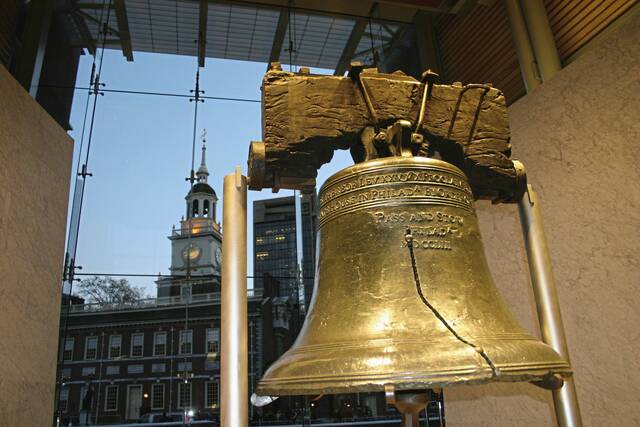
During the 2013 government shutdown, I was surprised to find the Liberty Bell was “closed.” You could stand there and look at it but only through tourist-smudged glass.
This time around, the Liberty Bell Center and other buildings that are part of Independence National Historical Park are closed again. But the National Park Service makes a point of saying that they “remain as accessible as possible.”
It’s a small but telling difference between this shutdown and previous ones. In the past, the public has blamed the shutdown on the opposition party in Congress. And the president responds by making the shutdown as visible and painful as possible. Voters are already blaming the opposition for the standoff, the theory goes, so why not maximize their annoyance and pressure it to fold.
This shutdown has a different dynamic. The public is displeased with both sides’ behavior, but on balance tends to put slightly more blame on Republicans than Democrats. That means President Donald Trump has strong incentives to minimize the visible pain of the shutdown. Look how close you can get to the Liberty Bell!
More consequentially, Trump isn’t letting a lack of authorized funds stop him from paying the troops or even maintaining the WIC program for pregnant women and young children. The legality of these moves is questionable. The White House is essentially daring Democrats to sue, in which case they would be responsible for the lack of military pay. But Democrats aren’t taking the bait.
In part, of course, that’s because Trump is doing plenty of other questionably legal things.
Office of Management and Budget Director Russell Vought claims the shutdown empowers him to do large-scale layoffs of federal civilian workers, a claim that both Democrats and a federal judge dispute. Trump also purports to have the power to do things like cancel federal funding for the Gateway project connecting New Jersey to New York City as a means of punishing Democrats.
Again, leaving aside the dubious legality of all this, politically this is not the usual form of pressure found in shutdown playbook. The senators Trump is hitting by cutting funding to blue states are not the vulnerable frontliners who might be coerced into caving. They’re safe-seat Democrats whose constituents would rebel if they backed down.
In fact, in concrete political terms, these retaliation efforts are only making it easier for Democrats to hold out.
Democrats’ fundamental strategic dilemma is that to meaningfully pressure the GOP, they need to put states like Ohio, Texas, Iowa, Kansas and Alaska in play. So far, there’s little sign that’s happening.
What’s more, even though Democrats often argued the appropriations lapse could be used as a form of “leverage” against Trump, there is very little actual leverage here. Trump is not really sweating the lack of appropriations. ICE raids and deportations continue. Troops are still getting paid. He can still abuse prosecutorial power to persecute his political enemies.
Meanwhile, Trump’s abuses of power make Democrats less inclined than ever to strike a deal on some narrow basis.
For now, there simply isn’t meaningful pressure on either the White House or Senate Democrats to cave. The result is a standoff that, unless Republicans choose to resolve it on their own, could persist for a long, long time.


