


Neanderthal toddlers grew faster than their modern human counterparts, likely as an adaptation to living in a cold, harsh environment, new research suggests.
The discovery, which was made using the bones of a young Neanderthal discovered in Amud Cave in northern Israel in the 1990s, suggests that Neanderthals and modern humans (Homo sapiens) followed different evolutionary paths after they split from a common ancestor around 600,000 years ago, the researchers reported April 15 in the journal Current Biology.
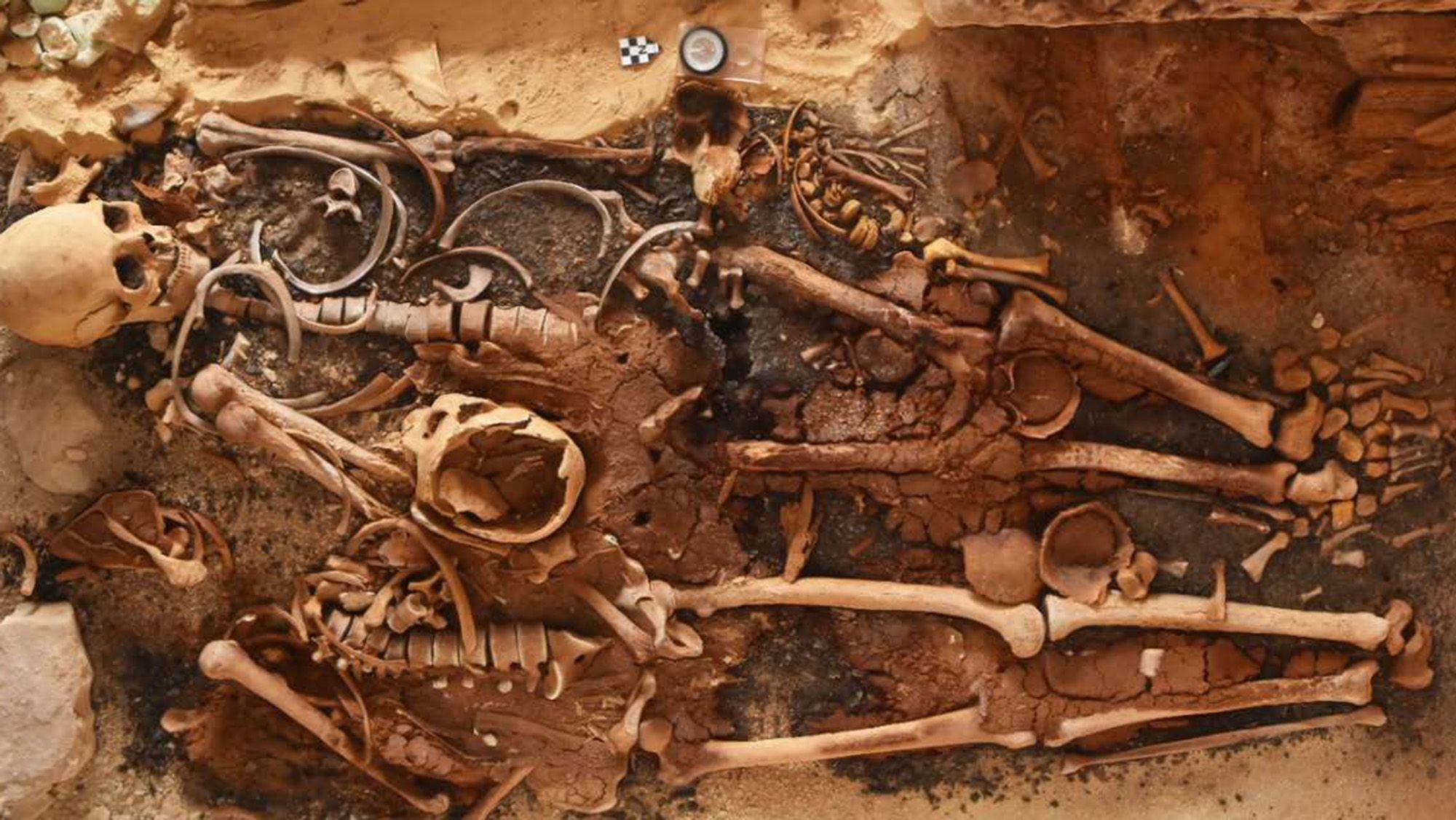
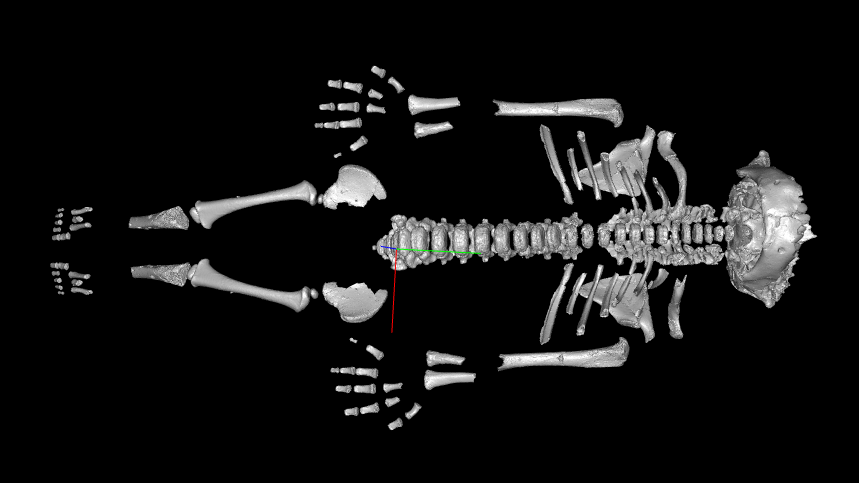
The Amud 7 skeleton was found in more than 100 pieces, which included fragments of the child’s arms, legs, chest and skull, all of which displayed distinctively Neanderthal anatomical features even at the child’s young age. However, because Neanderthal infant skeletons are rarely found, the actual age at death of Amud 7 has been difficult for researchers to pin down.
Archaeologists typically estimate an ancient child’s age based on the growth and eruption of teeth and on the size and completeness of various bones. The growth curves for the bones and teeth of modern human babies are well documented, but Amud 7 has revealed that at least one of the Neanderthals’ growth stages was much faster than modern humans’.
When the researchers compared the tooth development of Amud 7 with that of modern humans, they found that the Neanderthal’s lower front teeth yielded an age estimate of about 6 months. But Amud 7’s bones were more in line with those of a 14-month-old modern human. This discrepancy is likely related to differing growth stages, the researchers wrote in the study.
While newborn Neanderthals were comparable with modern human newborns in terms of tooth formation, tooth eruption and the lengths of the arm and leg bones, they had significantly larger skulls. In the second growth stage — infants, toddlers and young children, or about 1 to 6 years old — Neanderthals’ bodies grew significantly faster than their teeth, while modern human babies’ teeth and bodies grew more proportionately. Then, in later childhood, Neanderthals’ body growth and tooth development evened out and more closely matched modern human children’s trajectories, the researchers found.
“The results of this study suggest that the growth trajectory of young Neandertal infants may have differed from that of H. sapiens,” the researchers wrote in the study. Specifically, Neanderthal babies’ bodies developed more rapidly than modern humans’ did in the first years of life but then evened out during later childhood. “This suggests an evolutionary strategy emphasizing accelerated development in the early years of life, likely advantageous in the harsh environments Neandertals inhabited,” the researchers wrote.
Although this new analysis of the Amud 7 skeleton reveals important information about Neanderthal children’s growth and development, the researchers cautioned that more data is needed from other non-adult Neanderthal skeletons. They noted that a larger sample size may shed light on whether this pattern was widespread or a specific ecological adaptation.
Been, E., Hovered, E., Rak, Y., Le Cabec, A., Dean, C., Barash, A. (2026). Rapid growth in a Neandertal infant from Amud Cave in Israel. Current Biology 36. https://doi.org/10.1016/j.cub.2026.03.054
How much do you know about our closest relatives? Test your knowledge with our Neanderthal quiz!