In a world in which damn near everything is a partisan issue, gambling, for the most part, is not. There are Republicans who are strongly supportive of legalizing it and others who are staunchly opposed, and there are Democrats who fit each of those descriptions as well.
For evidence on how non-partisan gambling can be, look no further than two of past/present legislators at the forefront of the fight advocating for more states to consider regulating online casino gaming.
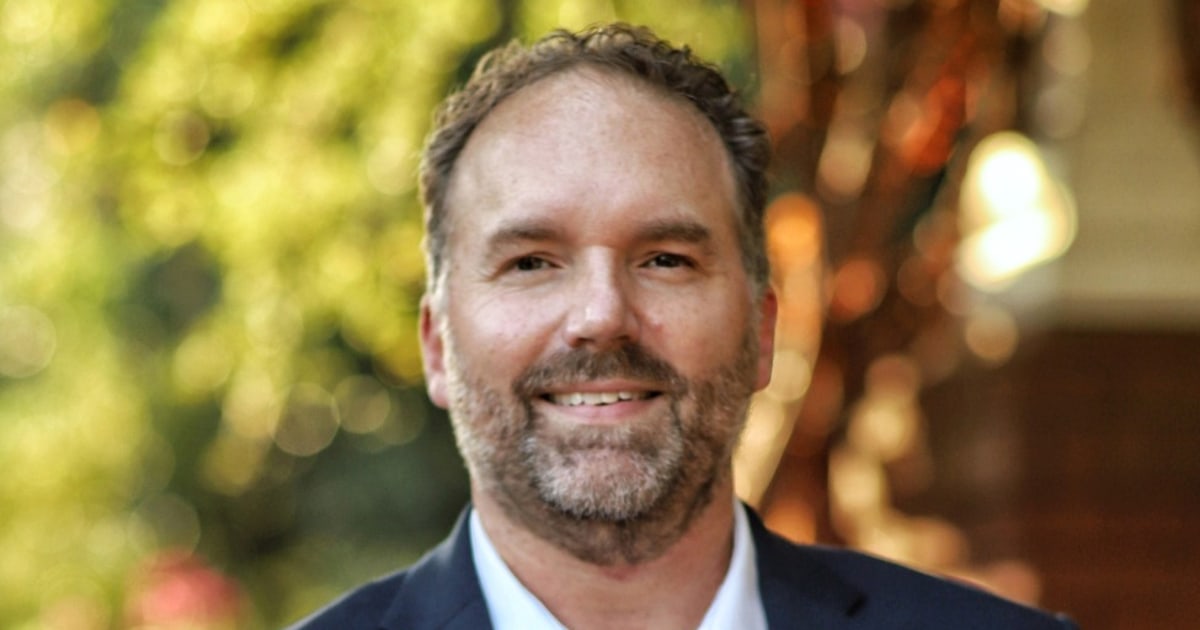
Brandt Iden and Shawn Fluharty have a lot in common. They were born six months apart, to the day, in the early ‘80s. Iden was elected to the Michigan House of Representatives in 2014, Fluharty to the West Virginia House of Delegates the same year. Iden successfully led the charge to legalize sports betting and online casino in his state before being term-limited out in 2020, and Fluharty got the same two verticals across the finish line in his state (and is still in office as the minority whip).
But there’s one stark difference: Iden is a Republican, and Fluharty is a Democrat.
Again, gambling is one contentious issue that does not see either blue or red. (Some might say it only sees green.)
As 2025 winds down, Iden and Fluharty stand out as two of the highest profile voices, with full understandings of the politics at play and lived experience navigating them, promoting the positive opportunities legal iCasino can provide.
And both happened to speak on the issue on Casino Reports-affiliated podcasts that dropped late last week.
“We need to work as an industry to realize just because something makes money is not enough to get it across the finish line,” Fluharty, who in his spare time is the president of the National Council of Legislators from Gaming States (NCLGS), said on the latest episode of The Business of Betting. “You have to have direct conversations with legislators.”
“I’m an educator. That’s my job,” Iden, now the vice president of government affairs for Fanatics Betting & Gaming, said on the most recent episode of Low Rollers. “I never go to a state and say, ‘Look, the Michigan model’s going to work for you.’ All I can tell [legislators] is there’s been this tremendous amount of success for the state of Michigan, for operators in Michigan, for tribal communities in Michigan, and importantly, for the consumers all the way around. So I always like to say, ‘There’s four ways that this is incredibly successful,’ and it’s been disappointing to me that we just haven’t seen that translate [to legalization] in other states.”
Online casino gaming is regulated in seven states: New Jersey, Pennsylvania, Michigan, West Virginia, Connecticut, Rhode Island, and Delaware. Rhode Island launched (with a single operator) in March 2024; otherwise, all of those states had begun offering legal iCasino by 2021.
Hence Iden’s expressed disappointment. State-by-state legalization has largely stalled out.
Reasons for the stall-out are myriad, but Fluharty cited among them COVID relief funds enabling states not to be financially needy for the last several years, as well as the distraction of a presidential election year in 2024.
Iden believes the industry “missed an opportunity” to convince states to pass online casino and sports betting in tandem during the 2018-23 period when the latter was being legalized at a steady pace. He also noted that passing an iCasino bill has historically been a long, slow process.
“In Michigan, it took me five, almost six years to pass that legislation, and I had a veto from the former governor (Rick Snyder) before the current governor (Gretchen Whitmer) signed it,” he said. “It just takes a very long time, and these conversations unfortunately about online casino now … started after they had already passed sports betting. So it’s a whole other educational cycle that has to take place.”
Fluharty put a glass-half-full spin on it, pointing out that emerging from a major election year and from the COVID relief fund era, “we have seen more bills introduced” in 2025.
Indeed, as veteran journalist and Casino Reports contributor Steve Ruddock details in his monthly “Ruddock Report,” a full 12 states considered iCasino legislation during this calendar year. None legalized the activity, but Maine advanced a bill to Gov. Janet Mills’ desk (which has been punted to January 2026) and various other states progressed in terms of hearings and discussions.
Online casino is already in IN w/offshore websites and unregulated “sweepstakes” games. They have no oversight, no consumer protections, and generate zero revenue for the state. Thanks to @EthanEManning#INleg took a great step forward today towards protecting consumers! TY!
Iden believes those discussions are instrumental. When asked which state will be next to legalize, he didn’t name one in particular but painted a picture of the type of state that could cross the finish line soon, and his first qualifier was “states which have discussed it for a period of time.”
“It can’t be a state that’s just going to all of a sudden do it tomorrow,” Iden said. “You’ve got states out there that have talked about this for four or five years, whether it be Maryland, Indiana, Illinois. You’ve got, obviously, a lot of chatter in New York. I think with the [licenses nearly decided for the] land-based casinos, the issue finally may be wrapping up in New York. That opens up a runway there.”
Other critical factors that Iden pointed out are states with a history of brick-and-mortar casino gaming (which describes most states) and with a particularly urgent need for money (which is describing more and more states).
“Starting Jan. 1, obviously, the federal government has pushed a whole bunch of new costs onto states through the One Big Beautiful Bill,” Iden said. “These are costs that are going to have to be either made up or states are going to have to choose to make cuts. … There’s only so many ways you can come up with hundreds of millions, potentially billions of dollars.
“In July, when these states are doing their budgets, they’re going to be looking at these astronomical healthcare costs that are now pushed upon them and say, ‘What do we want to do? Do we want to eliminate healthcare for a percent of citizenry in our states, or are we going to step up and cover it?’ And this is one way that they can step up and cover it. I think it’s a great way, but that’s just me.”
Fluharty hit on the same point by saying online casino “raises new revenue without raising taxes, which is a goal of every lawmaker.”
And it raises a lot more revenue than sports betting does.
“It’s a different ballgame,” Fluharty said of iGaming. “I mean, you’re talking, what, the ratio is now four-to-one almost in certain states [in relative tax revenue]. So, it’s something that pulls that lever. So then you’re not running out taxing somebody else through the roof.”
We passed sports betting back in 2018. Now we have a regulated market and can address problem gaming. You can’t do that in an unregulated market.
Money is a fine incentive for lobbyists and general industry advocates to promote to legislators, but lately it hasn’t been strong enough to overcome the disincentives in many lawmakers’ minds.
Chief among them, according to Iden: concern over such easy access to gambling for the citizenry.
“It’s sort of the unknown, right?” Iden said. “I think the idea of casinos and being integrated with technology … and having 24-hour access to that is … an issue for legislators to say, ‘Wait a minute, we need to really think through how this works.’ And I certainly don’t deny that. … But lawmakers have to understand first and foremost this is already going on. Your constituency already has access to an online casino 24 hours a day, seven days a week.
“Now the question becomes, do you want to regulate it? Do you want to put guardrails around it? Do you want to provide consumer protections for your citizenry?”
“Lawmakers have to understand first and foremost, this is already going on. Your constituency already has access to an online casino 24 hours a day, 7 days a week.”@BrandtIden joined LOW ROLLERS this week to share his insights on the push for iCasino legalization. A taste: https://t.co/swLwZrCScU pic.twitter.com/GLw4REeYlD
Another major roadblock Iden encounters is the theory that legal online casino takes business away from brick-and-mortar casinos, which in turn will eliminate jobs at those casinos. But the former Michigan representative does not believe that theory is grounded in reality.
“If it really existed,” Iden said, “if there was really cannibalization in a state like Michigan with 23 tribal casinos, three commercial casinos, a robust online lottery, you know what they would do? They would repeal it. That’s it. If it was that bad, if it was destroying jobs in the city of Detroit, the mayor would march into Lansing and he would simply say, ‘Get rid of this, this is awful.’ Right? That hasn’t happened. In fact, what we continue to see is double-digit growth in both the land-based casino gaming as well as the online gaming.”
Sometimes, external factors help make your case for you. While Iden and Fluharty are trying to convince legislators that people in their state already have access to online casino games that are not regulated and taxed, the growing awareness in states of sweepstakes-style online casinos — which is leading to a flood of legislation to ban those operations — could help advance the ball in 2026.
“It’s really ironic now that sweepstakes, which are now getting barred in state after state because they’re illegal gambling or revenue theft out of states, it’s helping spur the discussion on a regulated model and it’s going to help spur expansion of iGaming,” Fluharty predicted. “That’s what’s going to happen next.”