




Follow us
Add us as a preferred source on Google
Subscribe to our newsletter
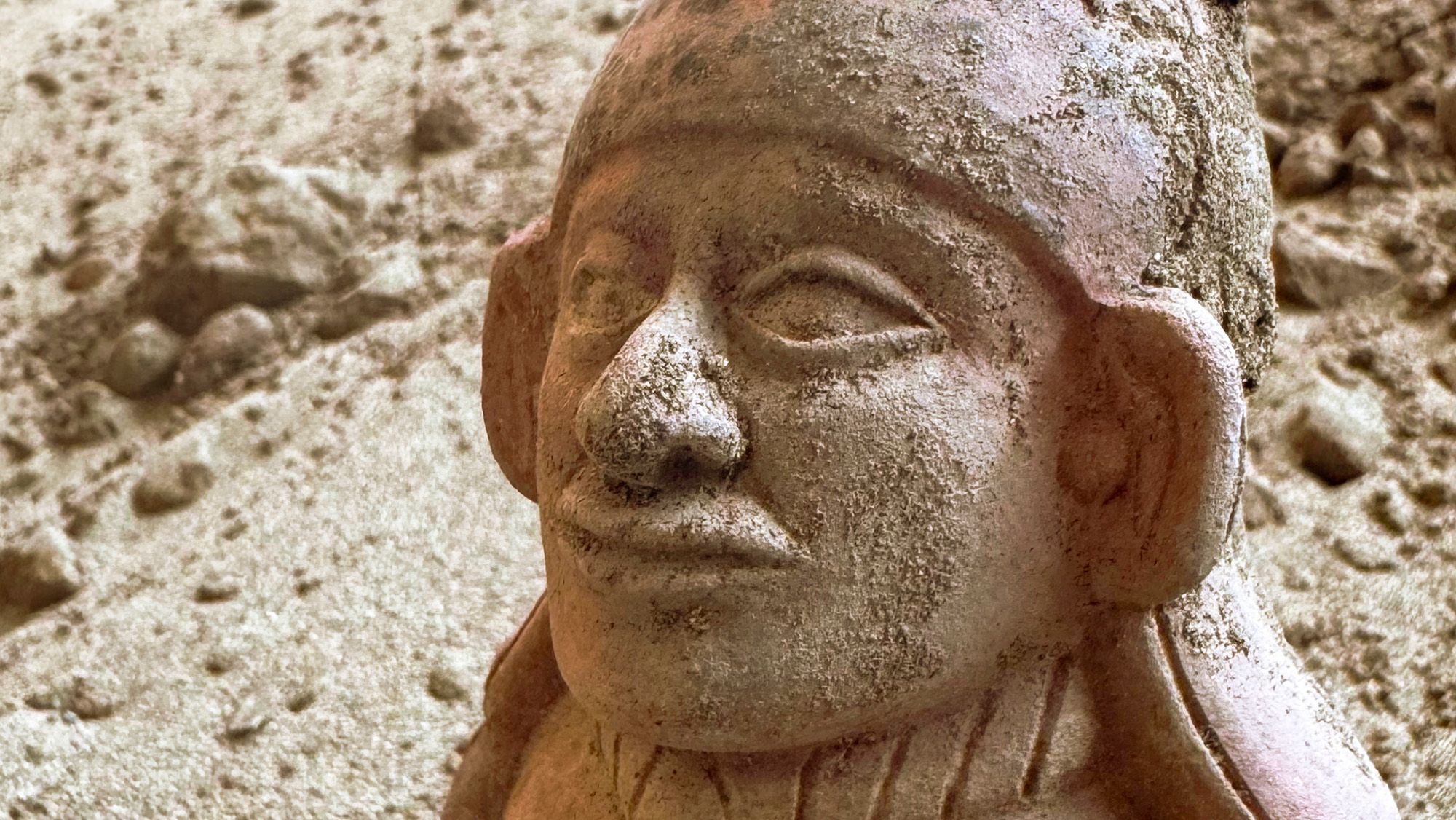
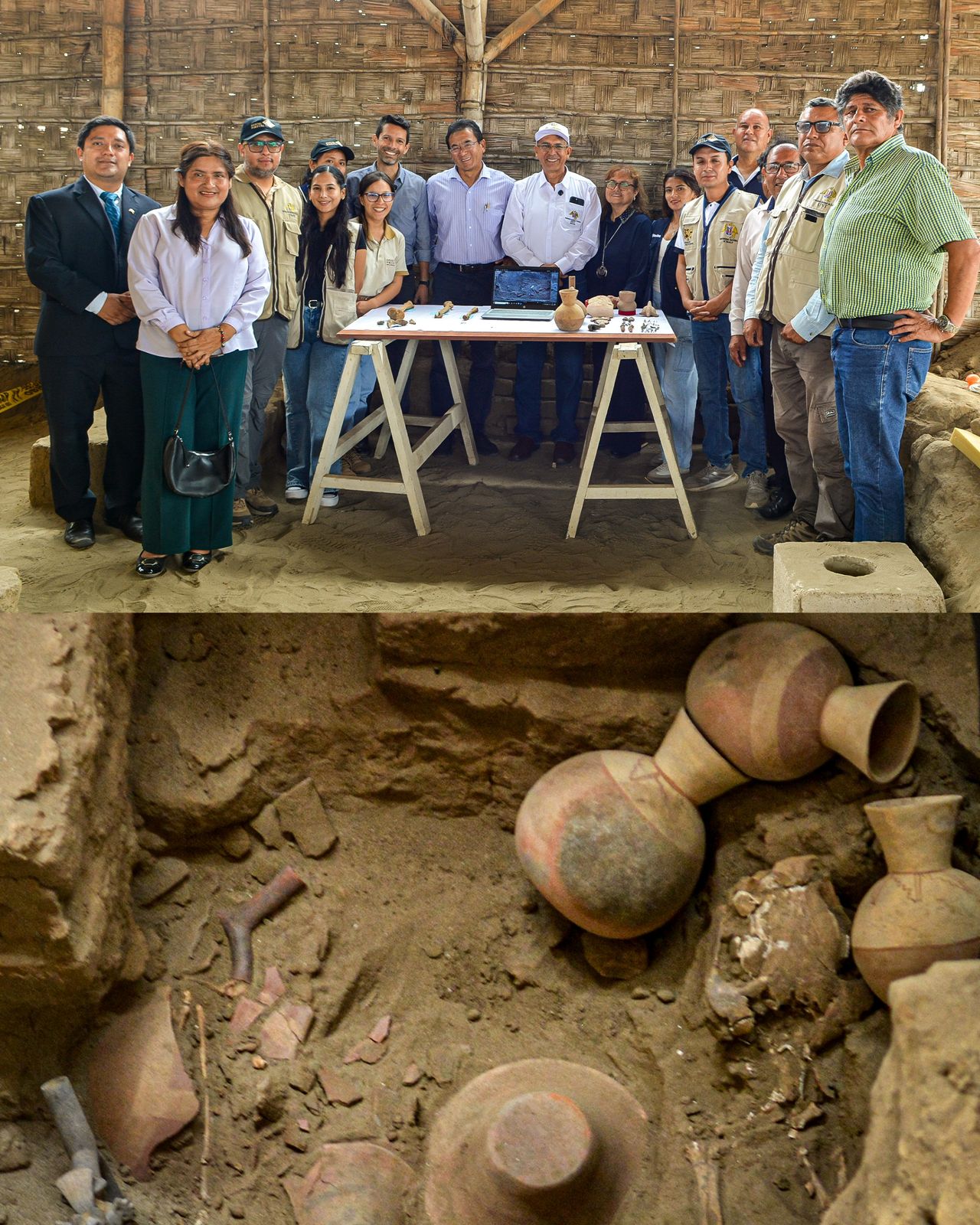
The child was buried alongside two ceramic objects depicting defeated warriors about to be sacrificed.
(Image credit: Huacas de Moche Archaeological Project – UNT)
Archaeologists in Peru have found an elaborate 1,500-year-old tomb that may hold the remains of a high-status toddler from a pre-Inca civilization.
The burial, which is from the Moche culture, also contained vessels depicting prisoners with rope around each of their necks and a sculpture of a human-bird deity.
Moche (also known as Mochica) culture developed along the northern coast of what is now Peru from the third to the ninth century. They created agricultural lands in the region’s desert landscape, and their archaeological record includes monumental temples, water canals, pottery, metallurgy, textiles and a distinctive form of art. The Moche didn’t have a written language, but they left behind thousands of realistic portrait vessels, which are somewhat similar to the prisoner sculptors found in the toddler’s burial.
Latest Videos FromLive Science
In the newfound tomb, the team unearthed a small skeleton, which is likely the remains of a toddler who was, at most, 2 years old, Carlos Rengifo-Chunga, director of the University of Trujillo’s Huacas de Moche Archaeological Project, told Live Science. The child’s sex is unknown.

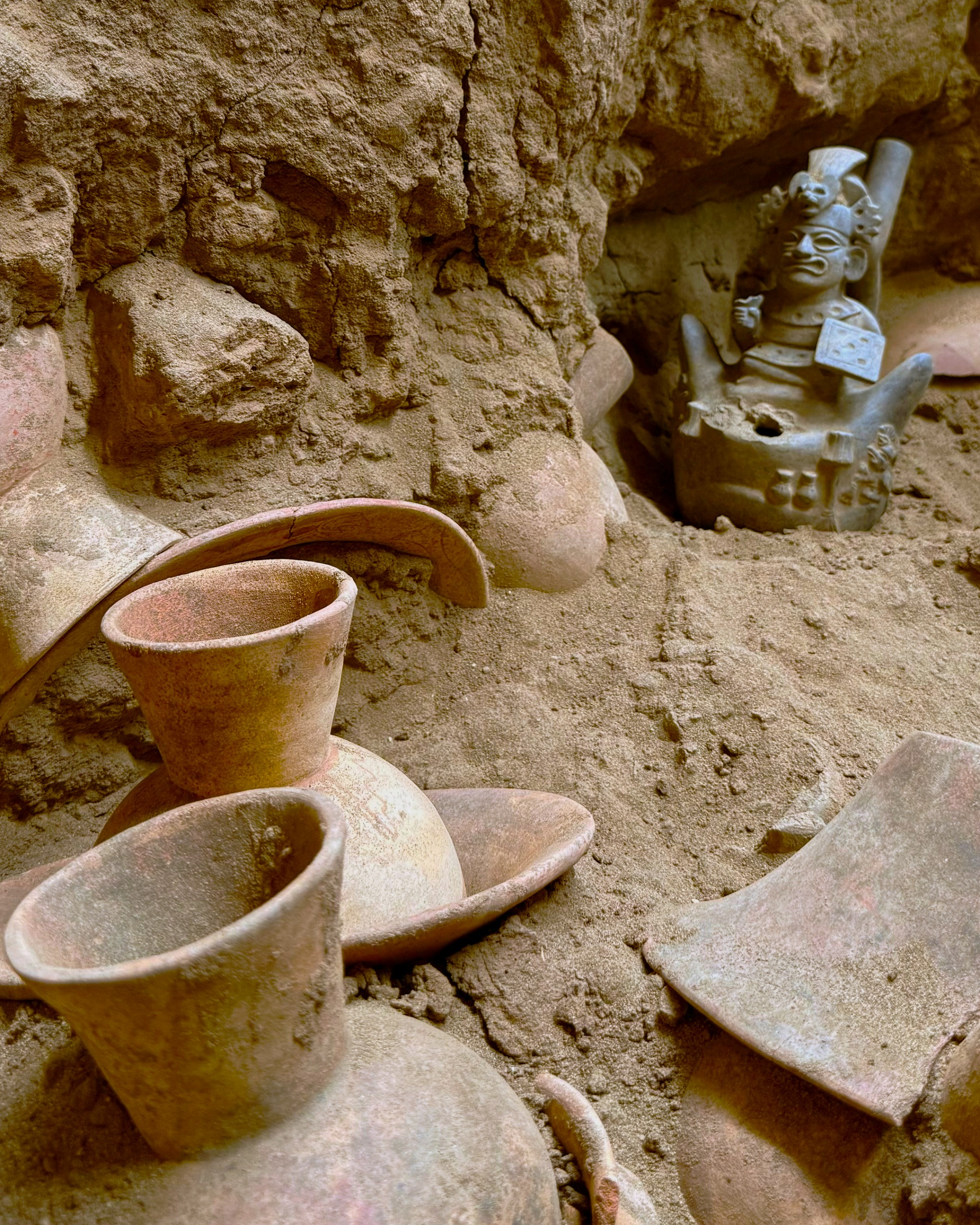
The child was buried alongside 32 ceramic objects associated with Moche culture.
(Image credit: Huacas de Moche Archaeological Project – UNT)
Rengifo-Chunga and his colleagues also found two copper objects in the burial: a mask-like disk covering the child’s face, and a half-moon object on their feet. In addition, the burial contained 32 ceramic objects associated with Moche culture, including those depicting the prisoners and the deity.
The tomb was large compared to the child’s small size, and could have easily held an adult, Rengifo-Chunga said. It dates to the sixth or seventh century, he added.
The team unearthed the tomb inside the Uhle Platform at the Huacas de Moche archaeological site in northern Peru. The Uhle Platform is a mausoleum, attached to the Huaca de la Luna temple, with a patio archaeologists call the Patio of the Serpents. Of the more than 80 burials previously uncovered there, the tomb represents the only known child to receive this sort of lavish burial.
Get the world’s most fascinating discoveries delivered straight to your inbox.
The elaborate funerary treatment, including the use of copper, and the location of the tomb all suggest that the child belonged to an elite class of Moche society, Rengifo-Chunga said.
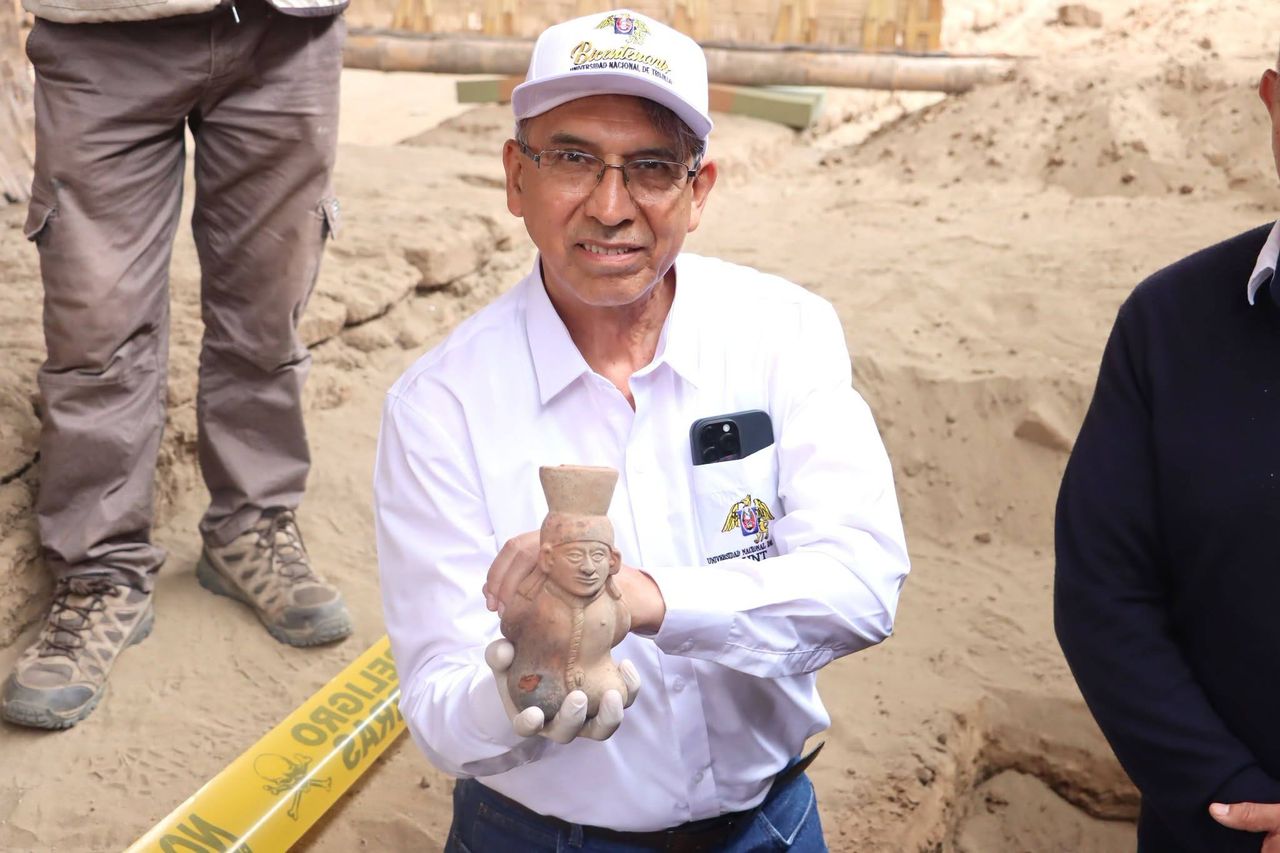
The two prisoner sculptures are associated with the “ritual of combat,” a common theme in Moche art. In this sort of imagery, two warriors fight each other, and the loser is stripped of his clothes and weapons, tied around the neck with a rope and offered as a human sacrifice, Rengifo-Chunga said. The prisoners depicted on these two vessels were the losing warriors, and their presence in the burial of a child is rare.
“One would normally presume that these kinds of vessels represent something related to the deceased’s life,” Rengifo-Chunga said. For example, a vessel like this might signify that the individual took part in combat.
Image 1 of 3

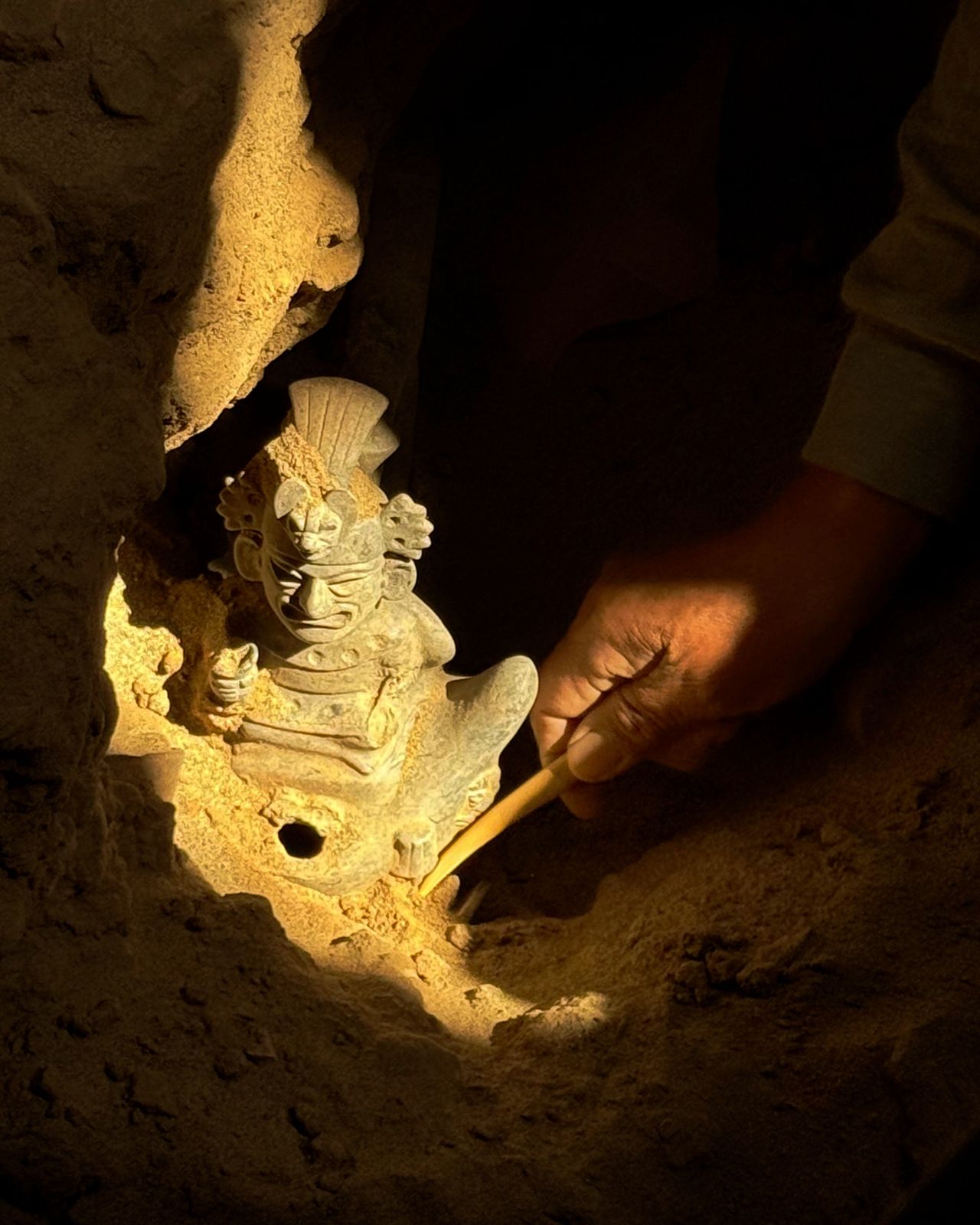
(Image credit: Huacas de Moche Archaeological Project – UNT)
One of the ceramic objects depicts a presumed deity with human and bird features.
(Image credit: Huacas de Moche Archaeological Project – UNT)
An archaeological team discovered a likely elite child burial at the Huacas de Moche archaeological site in Peru.

(Image credit: Huacas de Moche Archaeological Project – UNT)
One of the two ceramics depicting prisoners that archaeologists found in the toddler’s burial.
But a toddler couldn’t have taken part in such an activity. In general, archaeologists wouldn’t expect to see elements of an adult ritual in the burial of a child. “This expands our knowledge on Moche funerary practices,” he added.
The sculpture of the presumed deity depicts a human body with bird wings and a bird tail, although for some scholars it might be interpreted as a god in transformation, Rengifo-Chunga said. The deity holds a square shield in one hand and a goblet in the other, and is flanked by two bird “assistants” wearing ceremonial garments.
Researchers will have to investigate whether the deity is a known Moche god, or a newfound addition to the pantheon. Either way, the object joins a contentious debate over whether the Moche pantheon consists of many gods, or just a few that can transform into many different versions, Rengifo-Chunga said.
The artifacts are now in the laboratories of the Santiago Uceda Castillo Museum in Peru, where they will undergo conservation treatment.
How much do you know about the first people to reach the Americas? Find out with our First Americans quiz.