

Some of the last surviving Neanderthals displayed greater genetic diversity than scientists previously thought, a new study of ancient DNA reveals, challenging the idea that genetic decline was the main cause of their extinction.
Neanderthals were among the closest relatives of modern humans, with their lineages diverging around 500,000 years ago. Although Neanderthals once ranged across Eurasia, they are usually thought to have gone extinct about 40,000 years ago.
Much remains a mystery about why Neanderthals went extinct. Previous genetic analyses of DNA from Neanderthals in Siberia revealed that those groups lived in small, isolated communities with signs of frequent interbreeding between close relatives. This raised the possibility that Neanderthals might have died off due to genetic deterioration from inbreeding.
However, DNA from Neanderthals is rare, and high-quality genomes are especially uncommon; until the new study, only four were available, three of which came from Russia, at the edge of the Neanderthals’ geographic range. As such, it was uncertain whether DNA analyses of just a few Neanderthals accurately reflected why the entire lineage went extinct.
In the new study, published Wednesday (June 24) in the journal Nature, scientists recovered genetic data from 27 more Neanderthals, including a new high-quality genome, one with enough DNA for scientists to analyze many times to ensure the accuracy of their results.
“Some people might think the retrieval of ancient DNA from Neanderthals is now conventional; the truth is that this is far from trivial,” Carles Lalueza-Fox, director of the Natural Sciences Museum of Barcelona in Spain, who did not take part in this research, told Live Science. Adding 27 more Neanderthals “to our general knowledge is a remarkable achievement.”
The new data comes from 10 archaeological sites in northwestern Europe, in present-day Belgium and France. Seven of these sites were located in the Meuse Basin in Belgium, an area with a high concentration of late Neanderthals — those who lived after about 70,000 years ago. One of these sites was the Goyet cave system in Belgium, which recent findings suggested may hold evidence of Neanderthal cannibalism.
Get the world’s most fascinating discoveries delivered straight to your inbox.
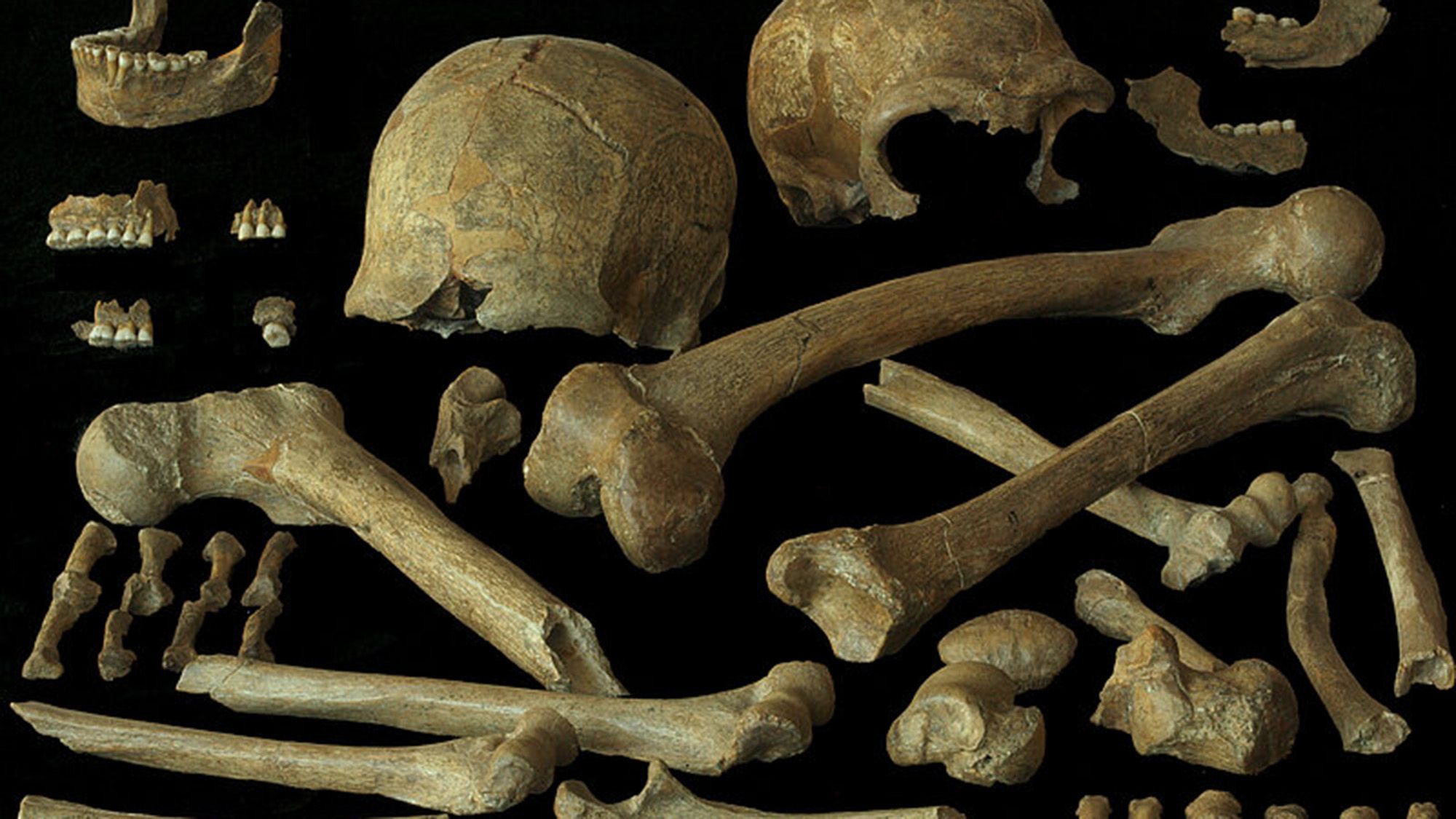
Researchers examined Neanderthal remains found in the Goyet cave system in Belgium.
(Image credit: Mateja Hajdinjak)
The genetic analysis revealed the late Neanderthals of northwestern Europe separated from a common ancestor with other known Neanderthals about 54,000 years ago. The newly studied late Neanderthals were more closely related to one another than late Neanderthal groups in other parts of Europe.
The scientists discovered that unlike other Neanderthal groups, many of the Neanderthals they examined showed little evidence of inbreeding. In addition, the new high-quality Neanderthal genome did not show lower genetic diversity than earlier Neanderthals. This finding suggests that reduced genetic diversity may not have been the primary reason Neanderthals died off.

A femur (thigh bone) from a Neanderthal found in Belgium.
“I am very happy to dispel the misconception that all Neandertals went extinct because they were too inbred,” Alba Bossoms Mesa, a doctoral researcher at the Max Planck Institute for Evolutionary Anthropology in Germany and first author of the study, told Live Science.
The study also revealed that the late Neanderthals of northwestern Europe that they analyzed were a large population of genetically interconnected groups, rather than the genetically isolated communities seen among Siberian Neanderthals.
“Neanderthals lived across vast regions of Eurasia over hundreds of thousands of years, so of course there is a lot of variation between them,” Bossoms Mesa said. “It’s not good to generalize about Neanderthals. We have to keep diversity in mind.”
In addition, the newly analyzed late Neanderthals of northwestern Europe displayed a significant level of genetic diversity, dividing into at least four distinct groups, the researchers found. The splits between these groups appeared to originate during relatively warm spans of climate, perhaps reflecting times of population expansion during periods of favorable environmental conditions, the team noted.
Striking asymmetry
The late Neanderthals of northwestern Europe were contemporaries of modern humans (Homo sapiens) in Europe for up to 500 generations, the researchers said. Previous research has discovered Neanderthal DNA in modern-human genomes, revealing these lineages had mingled, with most modern-day humans outside Africa possessing some Neanderthal DNA. However, the new study found no evidence of recent modern-human DNA in these Neanderthals of Belgium and France, suggesting the two groups didn’t mate there.
The new findings add to a striking asymmetry seen between Neanderthals and modern humans. “We have several examples of early modern humans who had a Neandertal ancestor only a few generations back,” Bossoms Mesa said. “But in contrast, we do not yet have a single confirmed example of a Neanderthal individual with a recent modern human ancestor in their family tree.”
There are several possible reasons for this asymmetry, Lalueza-Fox said. For instance, maybe there were genetic problems that prevented H. sapiens DNA from integrating with the Neanderthal gene pool. For instance, a 2025 study suggested that different versions of a gene tied to red blood cell function might have caused Neanderthal-human hybrid women to miscarry their fetuses.
However, “in my view, this conspicuous bias likely reflects a pattern of differential social acceptance among Neanderthals,” he noted. “In brief, early modern humans were able to accept kids with Neanderthals but not the opposite, for whatever reason. This pattern, coupled with declining diversity in some Neanderthal populations, could explain their final extinction.”
Future research can see if Neanderthals at other sites, such as the Iberian or Italian peninsulas, displayed similar levels of genetic diversity, Bossoms Mesa said. However, analyzing samples from these latter areas “is currently a bit more challenging, because ancient DNA preserves better in colder areas,” she noted.
Alba, B. M., Essel, E., Peyrégne, S., Sümer, A. P., Iasi, L. N. M., Heide, C., Popli, D., Cesare, D. F., Gansauge, M., Gerullat, L., Lippik, L., Nagel, S., Nickel, B., Schellbach, B., Schmidt, A., Visagie, J., Weihmann, A., Zeberg, H., Zorn, J., . . . Hajdinjak, M. (2026). Genetic diversity of late Neanderthals in northwestern Europe. Nature. https://doi.org/10.1038/s41586-026-10625-1
How much do you know about our closest relatives? Find out with our Neanderthal quiz!