QUICK FACTS
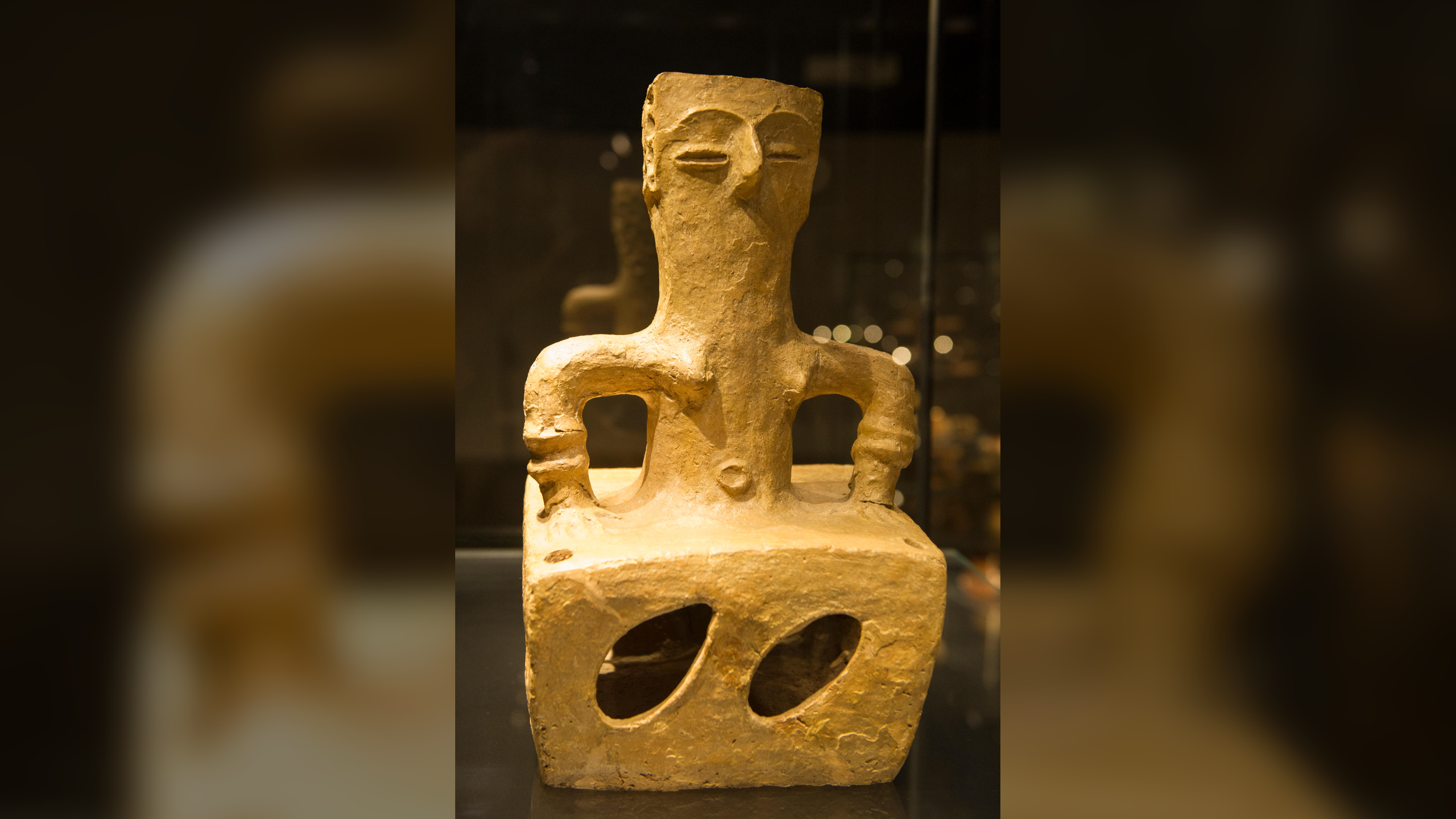
Name: Tumba Madžari Great Mother
What it is: A clay sculpture
Where it is from: Skopje, North Macedonia
When it was made: Sixth millennium B.C.
In 1981, a clay sculpture called the “Great Mother” was discovered in an ancient village in North Macedonia known as Tumba Madžari. The unusual cube shape of the woman’s lower half is thought to mimic the design of the Stone Age houses that she was intended to protect nearly 8,000 years ago.
The Great Mother was found in a house in the Tumba Madžari settlement, which archaeologists believe was in use between 5800 and 5200 B.C. The square structure measured about 26 by 26 feet (8 by 8 meters) and was built in a traditional Neolithic style: Wooden posts were interwoven with branches and covered by a layer of clay. Near the center of the house, which contained a hearth and an oven, archaeologists found the Great Mother statue, along with dozens of complete ceramic pots, cups and jugs.
MORE ASTONISHING ARTIFACTS
The Great Mother’s lower half is as box-shaped as the house where she was found. She appears to be rising above the house; this positioning suggests she is watching over the home, which is also a part of her. The hollow bottom hints that the sculpture was used as a kind of altar where incense, dried herbs or grain offerings were burned.
According to the Archaeological Museum of the Republic of North Macedonia, where artifacts from Tumba Madžari are on display, “the role of woman as child bearer and mother was equated with a fertility cult or the cult of the Great Mother goddess.”
Other “Great Mother” figurines have been found at Neolithic European and Near Eastern archaeological sites. However, the unusual shape of the Tumba Madžari sculpture that reflects a symbiotic relationship between the mother goddess and the house is found only in the Balkans.
For more stunning archaeological discoveries, check out our Astonishing Artifacts archives.