


“Ghost lineages” may sound paranormal, but the term is rooted in real science that genetic studies have revealed only relatively recently.
So what is a ghost lineage?
Sign up for our newsletter
Sign up for our weekly Life’s Little Mysteries newsletter to get the latest mysteries before they appear online.
In animals generally, not just in humans, finding ghost lineages has “mostly been by accident,” Love Dalén, an evolutionary geneticist at Stockholm University who studies extinct animals, told Live Science. “Our goals have been to study the evolution of mammoths, bovids and lemmings, and finding these ghost lineages was quite unexpected.”
In their analyses of ancient DNA recovered from the frozen fossils of key ice age animals that are now extinct — including mammoths, Pleistocene yaks and certain types of lemmings — Dalén and colleagues have detected several ancient populations that were revealed only by genetics.
These ghost lineages indicate that genetic diversity — the range of inherited traits within a population — was greater during the last ice age than it is now. “This is definitely a pattern we see in Arctic species that are alive today,” Dalén said. “Nearly all of them had much higher genetic diversity in the past, and to me this illustrates how important past climate change has been in shaping present-day biodiversity.”
But ghost lineages are too important to leave to chance findings. “It becomes more and more clear that we need to use an ancient DNA approach to fully quantify past changes in biodiversity,” Dalén said.
Human “ghosts”
Genetic ghosts in human evolution are especially interesting to scientists because they reveal a much more complex story of human evolution than many experts supposed.
The ghost lineages detected in the genomes of modern humans and our extinct relatives have revolutionized the study of millions of years of human evolution.
Most scientists once thought human evolution had progressed at a steady pace through known stages, culminating in the emergence of Homo sapiens in Africa about 300,000 years ago and its eventual replacement of all other forms of humans, with some limited interbreeding.
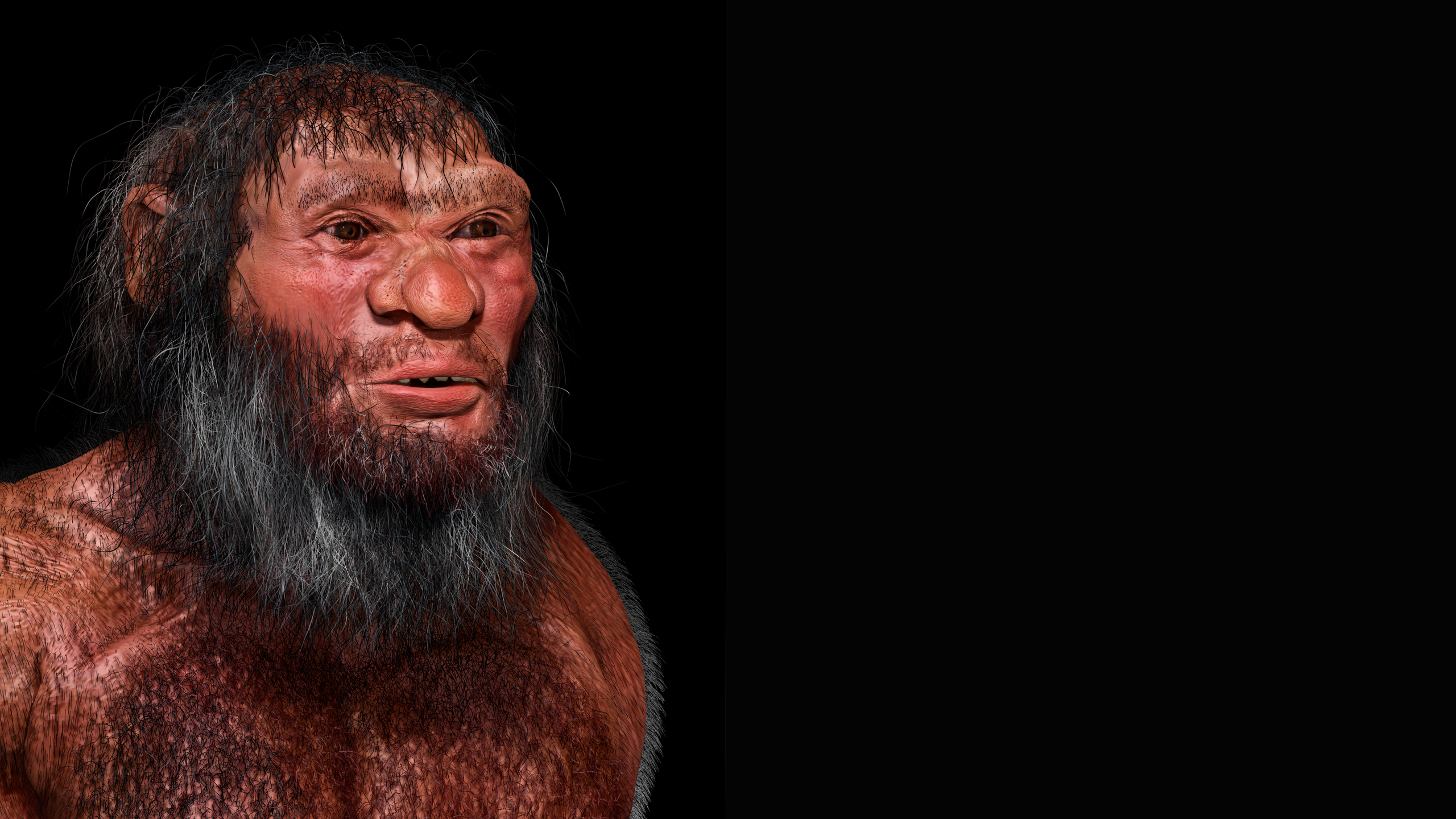
But genetic analyses over the past two decades have revealed traces of several human ghost lineages in the ancestry of people today and in the ancient DNA recovered from fossils. These human ghost lineages are echoes of archaic groups that existed for hundreds of thousands or even millions of years but that left no known fossils.
“Our discipline has gone from a simplified, straightforward linear model of evolution to a ‘bushier’ model in describing the last 7 million years,” Michael Petraglia, a paleoanthropologist at Griffith University in Australia, told Live Science in an email.
The human evolutionary “tree” grew ever larger and less well defined — turning into a “braided stream” of ancient groups — as more ghost lineages were identified, he said, and it is still growing.
When newfound fossils match “ghost genetics,” lineages become “de-ghosted,” and de-ghosting human ghost lineages is an important area of research. “With the application of DNA, it has become clear that gaps in our evolution existed, suggesting the presence of ghost populations for which the fossil record was not clearly present,” Petraglia said.
“Superarchaic” ancestors
Scientists have seen traces of human ghost lineages in the genomes of some modern-day human populations in parts of West Africa, Asia and Oceania, and Petraglia said paleoanthropological research has focused on a group of “superarchaic” hominins known only from their genes.
This ancient human ghost lineage separated from our own family tree of modern humans, Neanderthals and Denisovans between about 2 million and 1.8 million years ago — roughly when Homo erectus was the dominant species in Africa.
There are no fossils from the superarchaic ghost lineage, so scientists have only inferred its existence from the presence of ghost genes in their analyses of Neanderthal, Denisovan and H. sapiens genomes.
But the picture is complicated because of the confusion created by interbreeding. “Genetic work suggests that the ancestors of Denisovans, Neanderthals and Homo sapiens met and interbred a number of times,” Petraglia said. “This has set off debate as to finding the last common ancestor and understanding the line of descendants.”
There is genetic evidence that the Denisovans interbred with the superarchaic lineage in at least two distinct interbreeding events, resulting in a relatively high number of “ghost” genes from the superarchaic human lineage in the genomes of Denisovans and those of modern humans with Denisovan ancestry.
“These are exciting times in human evolutionary studies, and there is growing support that hominin evolution was much more complex than imagined before, including multiple interbreeding events that make us what we are today,” Petraglia said.