



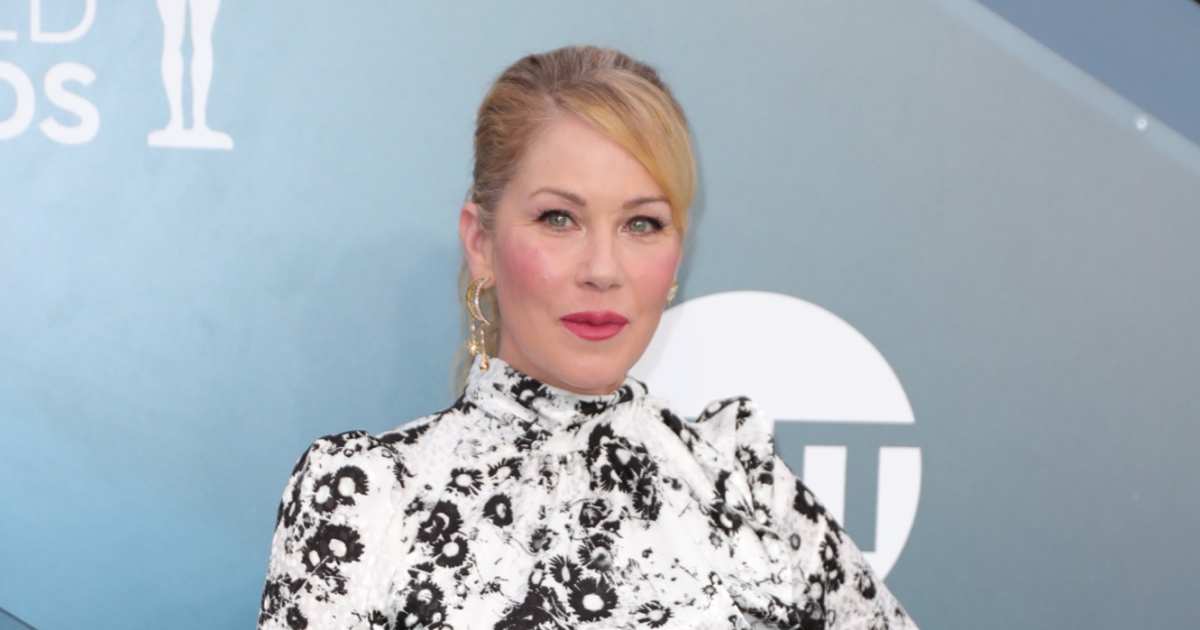


Breonna Frandson, 34, who has a medical condition that prompts her to faint after getting injections, was sure she’d never be able to do in vitro fertilization.
The process would require her to inject herself with hormonal medications approximately 30 times over the course of the 10- to 14-day ovarian stimulation phase, which is when the ovaries grow multiple mature eggs at once.
It was only when Frandson, who lives in Los Angeles, learned about a procedure in which IVF medications could be delivered “needle-free” that she saw a path forward.
The procedure uses a quarter-sized adhesive catheter placed under the skin on the abdomen through which medication can be administered. And luckily, the inventor, Dr. Rachel Mandelbaum, an OB/GYN, reproductive endocrinologist and infertility specialist at HRC Fertility, was located right nearby.
“I’m a thorough researcher and, when I looked into whether there were any other options besides having to do this many injections, I was amazed when I found out about this technology — and that it was offered by a doctor in my area,” said Frandson, who, after multiple miscarriages and a diagnosis of “unexplained infertility,” delivered a healthy baby boy in September.
While the device, a small flexible port placed under the skin, must be inserted (and removed) by trained staff, that procedure is quicker and less painful than the daily injections required for IVF or egg freezing.
The only caveat: Swimming and doing such activities as saunas, steam rooms and hot yoga while wearing the device can prompt the adhesive to weaken.
“I was scared about how I would feel when the device was put in, but I didn’t feel it at all,” Frandson said. “There was no tenderness or bruising at the site either once I was done with that phase of IVF and the port was removed.”
Mandelbaum, who began brainstorming about new ways to administer IVF medications six years ago, was treating Type 1 diabetes patients at a high-risk obstetrics clinic when she realized she could apply some of the technology used to deliver medications to her diabetic patients.
“I thought there had to be a better way to improve the IVF experience and began thinking about how we could adapt insulin pump technology for use during the IVF process,” she said.
In 2022, during her own IVF cycle, Mandelbaum, a self-professed needlephobe, decided to test the device she had developed — in which a syringe attaches to tubing that, like a continuous glucose monitor, is then inserted into the catheter — on herself.
“I had a lot of fears and anxieties around injections, too, so I decided to be my own test subject,” she said.
Mandelbaum is not alone. In fact, needle anxiety and phobia, along with injection-related stress, can lead infertility patients to put off or discontinue treatment.
“We surveyed our patients and 60% revealed a phobia-level fear of needles,” Mandelbaum said. “Of that 60%, 20% of those patients told us this delayed them coming to our office.”
“When Dr. Mandelbaum told me that there wasn’t a difference in outcomes between the needle-free procedure and the need for multiple injections, I was sold.”
Breonna Frandson
Mandelbaum calls IVF “a marathon, not a sprint” and adds that repeated needle sticks remain a barrier. “The emotional burden of IVF is huge,” she said. “We know that patients are less likely to drop out of treatment if the experience is more comfortable and less invasive.”
Mandelbaum’s next step in crafting her new IVF method was a clinical study during which some patients did needle-free IVF and others did traditional injections. No matter the procedure, every patient was monitored the same way throughout their cycles.
“We found there was no difference in efficacy and no difference in hormone levels in the blood,” she said, nothing that there was comparable egg yield, embryo development and pregnancy rates when delivering hormonal medications the needle-free way. “After we published those results, that became the impetus to offer this in my own practice.”
That was in 2024 and, since then, hundreds of patients have used the device. Still, change can be difficult, especially in the high stakes — and expensive — world of IVF.
“The feedback from my colleagues has been overwhelmingly positive and a lot of them have adopted this technology,” Mandelbaum said. “But, as positive as it has been, there has also been hesitation, but I believe it’s critical to change the narrative around IVF. Anything we can do to help our patients’ emotional well-being during this process is incredibly important.”
As for Frandson, who was working in operations in the automotive industry before having her baby, there was literally no other way to proceed with IVF without this technology and, happily, she conceived after her first cycle.
“The success stories from other patients were compelling,” she said. “When Dr. Mandelbaum told me that there wasn’t a difference in outcomes between the needle-free procedure and the need for multiple injections, I was sold. I thought, why not give it a shot? IVF is already a gamble, but this made it possible for me to have a baby.”


