



Most smart scales measure your weight, BMI (Body Mass Index) and basic body composition metrics, such as muscle mass and body fat percentage. More premium models can also assess more complex stats — for example, they calculate your BMR (Basal Metabolic Rate, the minimum number of calories your body needs to perform life-sustaining functions, such as breathing and circulation) and biological age (how old your body appears to be rather than the number of years you have been alive). The best smart scales on the market can even perform segmental body analysis, meaning they use sensors in both a stand-on platform and a retractable handle to measure differences in tissue composition between different “segments” of the body. However, no single model can do what the Withings Body Scan can: provide you with insights into your cardiovascular health and nerve activity.
This foot-to-hand smart scale can measure your heart rate, ECG (the electrical signals in charge of your heartbeat), arterial stiffness (by measuring the speed at which the pressure wave from your heartbeat travels through your arteries), and Nerve Health Score (which is an assessment of peripheral nerve function, based on how well the skin in your feet conducts electricity). Put simply, the Withings Body Scan is more of an all-in-one health hub rather than merely a tool for tracking changes in your weight and body composition.

Withings Body Scan review
Withings Body Scan: How it works

The Withings Body Scan smart scale features a retractable handle.
(Image credit: Anna Gora)
The Withings Body Scan uses four technologies to take its measurements: bioelectrical impedance analysis (or bioimpedance, used for assessing body composition in almost all smart scales), impedance plethysmography and ballistocardiography (non-invasive methods that measure pulse wave velocity, which is an indicator of arterial stiffness) and electrochemical skin conductance (a non-invasive method for detecting activity in the small nerves in the skin).
All four are suitable for casual tracking at home, but none of them should be treated as diagnostic tools. They are simply not accurate or reliable enough to substitute for clinical tests done by a healthcare professional. The Withings Body Scan may be unusually expensive for a smart scale, true, but that does not mean we can expect results far superior to those obtained by cheaper devices — it is simply unfair. With that in mind, let’s dive into the nitty-gritty of what and how this smart scale measures.
Bioelectrical Impedance Analysis (BIA), or bioimpedance: This non-invasive method measures body composition by sending low-voltage electricity through your body and detecting how much resistance your body puts up against it. The current will flow freely through tissues with high water content, such as your muscles, and slow down or stop completely in tissues with low water content (your bones or body fat, for example.) The smart scale then uses complex algorithms to convert these electrical data points into body composition metrics.
Bioimpedance is less accurate than Dual Energy X-ray Absorptiometry (DEXA) and other clinically validated methods of measuring body composition. It is also more prone to imprecise readings, and that is because they are affected by multiple factors, including your hydration level and skin temperature. Therefore, BIA smart scales are best used for identifying long-term trends rather than ad-hoc check-ins.

A DEXA scan is the gold standard for assessing body composition.
(Image credit: Getty Images)
Pulse velocity measurement: Impedance plethysmography uses a low-voltage electrical current to measure blood volume changes in your arteries, while ballistocardiography measures the tiny mechanical vibrations of the body that are caused by the movements of blood within it. In simpler terms, the scale records when blood is ejected from your heart and when it reaches your feet. The longer this movement takes, the more flexible your arteries appear to be, and therefore the lower your risk of developing cardiovascular disease and hypertension, according to a 2024 review published in the journal Reviews in Cardiovascular Medicine.
In clinical settings, pulse wave velocity is measured using applanation tonometry. Smart scales can produce measurements that closely match this gold standard, but they can’t replicate it. Applanation tonometry is typically done when you are lying down and have two pressure sensors attached to two arterial sites, typically on your neck and groin. Smart scales, on the other hand, require you to stand up during the measurement and take the pulse wave velocity measurements from a different body site, according to a 2017 study published in the American Journal of Hypertension.
Nerve Health Score: This is a number from 0 to 100 that indicates the state of the tiny nerves in your feet’s sweat glands by measuring how well they conduct a low-voltage electrical current. This technology is referred to as Electrochemical Skin Conductance (ESC). The nerves in your feet are highly sensitive to damage caused by multiple different factors, such as chemotherapy or chronic conditions like type 2 diabetes or metabolic syndrome. A Nerve Health Score above 50 indicates normal nerve activity, while values below 50 signal potential neuropathy (nerve damage), according to a 2024 review published in the journal Frontiers in Neuroanatomy.

The Withings Body Scan calculates your Nerve Health Score using Electrochemical Skin Conductance.
(Image credit: Anna Gora)
The current gold standard for assessing nerve health is through a biopsy, meaning it involves the invasive surgical removal of your nerve tissue. Smart scales that use ESC have proven reliable and are considered a promising non-invasive tool for detecting nerve damage in patients with metabolic conditions. They can also help those patients track the effects of specific treatment or lifestyle change on small nerve regeneration. However, ESC levels may vary by ethnicity, and they may not directly correspond to the state of nerves in different areas of the body, the review authors noted.
Withings Body Scan: Design
- Height- and weight-inclusive
- Durable and does not smudge easily
- Large surface area with a relatively small display

(Image credit: Anna Gora)
Key specs
Dimensions (in): 12.8 x 12.8 x 1.1 (W x D x H)
Dimensions (cm): 32.5 x 32.5 x 25.6 (W x D x H)
Display: 2.8-inch LCD,320 x 240 pixels
Weight: 9.7 lbs (4.4 kg)
Connectivity: Wi-Fi
Max user profiles: Eight
Max user weight: 440 lbs (220 kg)
Modes: Standard, Baby, Athlete, Pregnancy, Eyes-closed
Companion app: Withings
Supported apps: Apple Health, Google Health, Samsung Health, MyFitnessPal, Strava, Runkeeper, Whoop
Power source: USB rechargeable with built-in lithium battery
Warranty: 2-year warranty
The Withings Body Scan is a solid, thoughtfully designed piece of kit. This smart scale is exceptionally height- and weight-inclusive: it has a relatively large platform and a long retractable handle, and its maximum user weight is 440 lbs (220 kg). To put that into perspective, most smart scales are limited to 396 lbs (180 kg). This is a big advantage: the Withings Body Scan can potentially better accommodate people with obesity and balance issues — two common comorbidities of metabolic conditions and diabetic neuropathy.
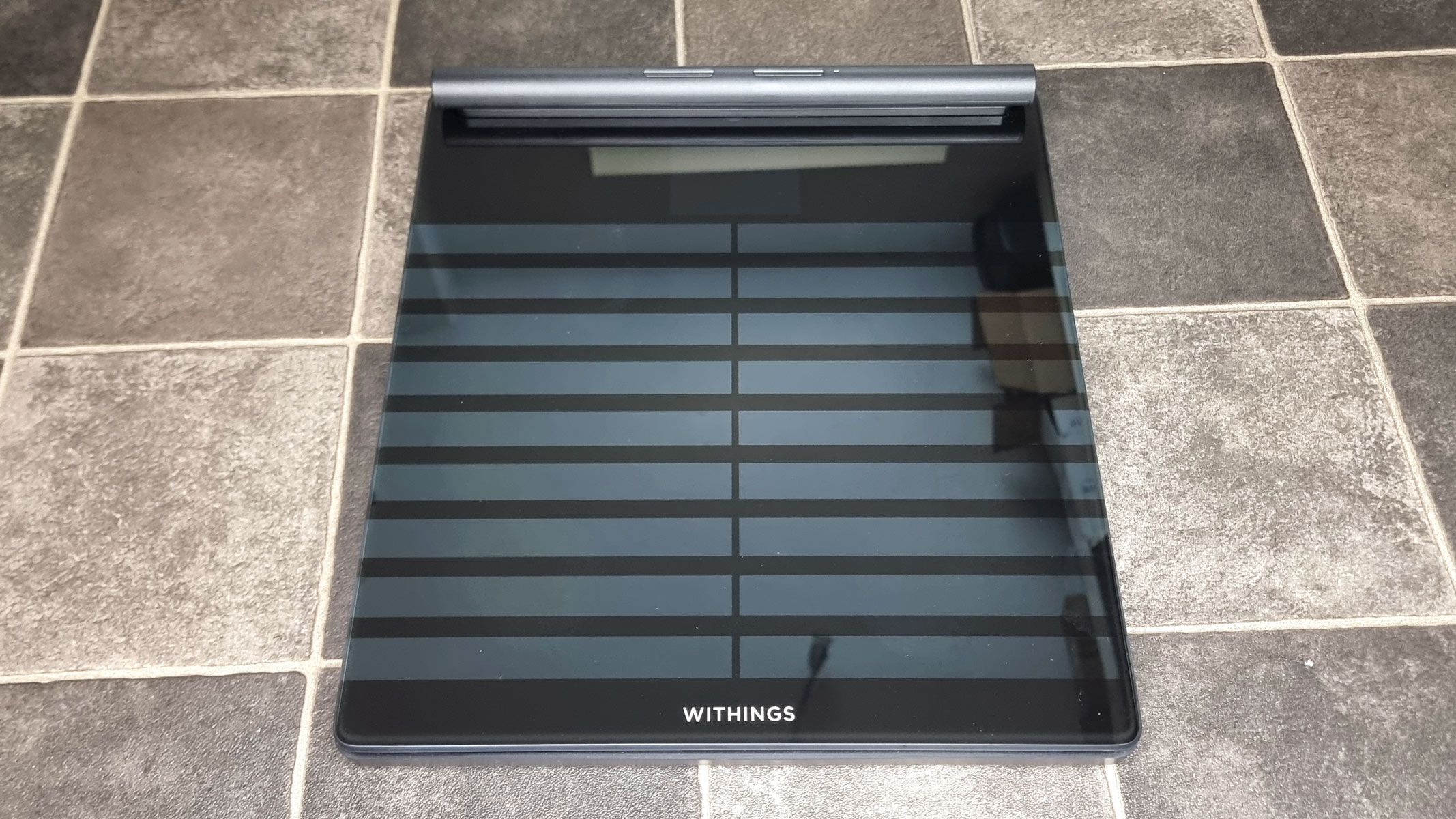
It also impressed us with its durability. We tested this smart scale for nearly two months — the Withings Body Scan sustained no scratches or any other damage, even though we accidentally dropped it on the hard tiles in our bathroom on at least two occasions. This smart scale has a clear premium feel to it, and this is not something we can say about most other bioimpedance devices we tested before.

The Withings Body Scan smart scale impressed us with its durability.
(Image credit: Anna Gora)
The Withings Body Scan is not just tough, but it looks good, too. We liked its unusually tasteful, minimalistic design and the discreet 2.8-inch (70 mm) display at the top of the unit. Speaking of the display, it may be relatively small, but it is also colorful, easy to read and not over-cluttered with stats and numbers. More importantly, it presents the measurements in an easy-to-understand manner, using language that’s body-positive, non-judgmental and considerate of people who may struggle with body dysmorphia and eating disorders.
We also appreciated that the glass platform did not smudge much. Of course, like most smart scales, the Withings Body Scan will inevitably collect some dust and stains — that’s just the nature of devices you stand barefoot on. However, we found this smart scale slightly more resilient to sweat patches and easier to clean than most other models we tested before. One quick wipe was enough to make the glass platform look pristine again.

The Withings Body Scan collects dust and smudges, sure, but it is also easy to clean.
(Image credit: Anna Gora)
Withings Body Scan: Features
- Detailed body composition analysis
- Multiple weighing modes
- Confusing app layout
The Withings Body Scan is smart in the full sense of the word, especially when it comes to features. To start with, this device can automatically detect up to eight different users, meaning there is no need to log into the app first to connect your user profile before each weigh-in. Once you step onto the Withings Body Scan, it will automatically recognize you by your weight. This may be a small thing, but it makes this smart scale very user-friendly.
Moreover, all of the measured metrics can be tracked in the Withings app, and shared with several other fitness-related apps, such as Apple Health, Google Fit, MyFitnessPal and Samsung Health. This smart scale can also sync with the data obtained from other Withings devices (the Withings ScanWatch 2 hybrid smartwatch, for example) for a more holistic view of your health.
The weigh-ins are relatively quick and easy, and we have never had to redo our measurements due to inconclusive results (which happened quite a lot with some of the other smart scales we tested). The Withings Body Scan tracks most key body composition metrics, including weight, fat-free body mass, BMI, body fat percentage, bone mass, muscle mass, body water percentage and BMR.

All of the measured metrics can be tracked in the Withings app.
(Image credit: Anna Gora)
It also provides segmental body analysis. Essentially, this smart scale can differentiate between muscle and fat mass in your trunk, arms and legs. This feature is particularly useful to those who want to track muscle development in different areas of their body — unlike most hand-to-foot models available on the market, the Withings Body Scan shows clear long-term trends in segmental body analysis, not just a snapshot of your body composition based entirely on the last reading taken with the device.
However, we would not consider this smart scale a particularly good fit for athletes and other advanced users. For example, the Withings Body Scan lacks some of the more advanced body composition stats, such as the difference between subcutaneous and visceral fat (fat under the skin and the fat that accumulates around internal organs). Also, its segmental body analysis does not differentiate between the right and left leg, or the right and left arm — this little omission could be a considerable disadvantage for bodybuilders and those recovering from one-sided injuries, for example.

(Image credit: Anna Gora)

(Image credit: Anna Gora)
Last, but not least, the weighing modes. The Withings Body Scan comes with Baby, Athlete, Pregnancy and Eyes-closed modes. We particularly like the last one — in the Eyes-closed mode, the scale will not show your body composition metrics on-screen during a weigh-in. Instead, it will display motivational messages or a smile emoji instead. Some users may appreciate that the Withings Body Scan allows them to track their weight without constantly seeing their daily numbers.
If there is anything we would complain about, it is the app layout. It is confusing and tricky to navigate, and it took us quite some time to learn where to find different stats. If you like clean, “clinical” apps overfilled with raw numbers, the Withings app may not be the best fit for you. If you are more focused on the overall trends and personalized lifestyle tips, however, we would still recommend it.
Withings Body Scan: Performance
- Relatively accurate body composition measurements
- Exceptionally long battery life
- Seamless app connectivity
The Withings Body Scan offers the longest battery life of all the smart scales we tested — according to the manufacturer, it lasts up to a year on a single charge. Understandably, we did not test our unit long enough to confirm whether that is indeed true. However, long-time online users of this smart scale generally praise it for its lasting performance, even with frequent weigh-ins.
In our tests, the Withings Body Scan displayed good tracking accuracy. We compared the body composition measurements taken with this smart scale to the data we obtained with a much bigger, more precise standalone FitQuest machine in our local gym. Both scales displayed the same body weight and we noted only small discrepancies in body composition analysis. The Withings Body Scan overestimated our body fat by about 2% and lean muscle by about 3%, while body water mass was 3% lower. Therefore, this smart scale proved to be slightly more accurate than the two other hand-to-feet models we tested before: the RunStar 8E SmartScan Pro and Renpho Morphoscan Nova. Both of these models overestimated our body fat percentage by approximately 5% and muscle mass percentage by 3%, and underestimated our body water reading by around 4%.

The Withings Body Scan smart scale took relatively accurate measurements of our body composition.
(Image credit: Anna Gora)
We also compared the cardiovascular measurements taken by this smart scale with the heart rate and ECG measurements obtained using our Withings ScanWatch 2. Both devices provided very similar readings — for example, there was only 2 bpm (beats per minute) difference in our resting heart rate. Unfortunately, we could not assess the Nerve Health Score as we did not have a reliable reference tool to compare the measurements with. Our score seemed largely accurate to us — but we do not have a diabetic food syndrome and live a relatively healthy lifestyle, so we may not be in the best position to give verdicts here.

(Image credit: Anna Gora)
Finally, the app connectivity. It scored high in our books: the Withings Body Scan instantly connected to our device and seamlessly transferred data between devices at all times. We have battled enough smart scales to know that good connectivity is not a given, so we truly appreciated the fact that our stats were always up to date.
Withings Body Scan: User reviews
At the time of writing this review, the Withings Body Scan was rated 4.1 out of 5 stars on Withings, 4.5 at Walmart, 3.8 at Best Buy, and 2.9 at Amazon. This smart scale was generally praised for its user-friendly design, long battery life and versatile tracking features.
As one user said: “The range of capabilities/metrics and the superb ease of use and integration with Apple Health make this a perfect support partner to keep on track with your health goals. I love how all Withings devices consolidate into the app for the holistic view of what’s going right now or what needs to be focused on health-wise.”
The tracking accuracy and app connectivity, on the other hand, received mixed feedback. One buyer said: “Weight, fat, muscle, and visceral fat readings were inconsistent. Every time I stepped on the scale (and I did it a LOT last night when the scale arrived), I had a different reading. Weight fluctuated 8 lbs over 10 readings, in a span of less than 30 minutes. The scale has decided I am gaining fat and losing muscle (that’s completely wrong), and the app is now showing my BMI as stable, despite having lost 40 lbs in 3 months.”
Negative reviews focused predominantly on individual faulty units and poor customer service from the company.
Should you buy the Withings Body Scan smart scale?

(Image credit: Anna Gora)
The Withings Body Scan is well built, easy to use and relatively accurate, but what truly makes this smart scale stand out among its competitors is its intense focus on long-term trends and a holistic analysis of your metrics. It is a great choice for those who want to improve their body composition while simultaneously monitoring their heart health and nerve activity in the feet — for example, people with type 2 diabetes, hypertension or metabolic syndrome.
For athlete-level fitness enthusiasts, however, the Withings Body Scan may lack the functionality to justify its high price.
✅ Buy it if: You want an all-in-one health station to monitor long-term changes in your body composition, cardiovascular function and nerve health.
❌ Do not buy it if: You are on a budget or looking for something more fitness-focused.
Withings Body Scan: How we tested
We spent nearly two months trying and testing the Withings Body Scan smart scale, looking into its design, features, ease of use, app connectivity and day-to-day performance. We also compared the heart rate and body composition measurements taken with this smart scale to the data we obtained with our Withings ScanWatch 2 and FitQuest machine (a bigger, more precise BIA scale used in our local gym). Finally, we gave our verdict on the general reliability and tracking performance of the Withings Body Scan.